Teslimat bölgelerinde kargonuzu kendiniz gidip almalısınız. Sitenin altında teslimat noktaları mevcuttur.



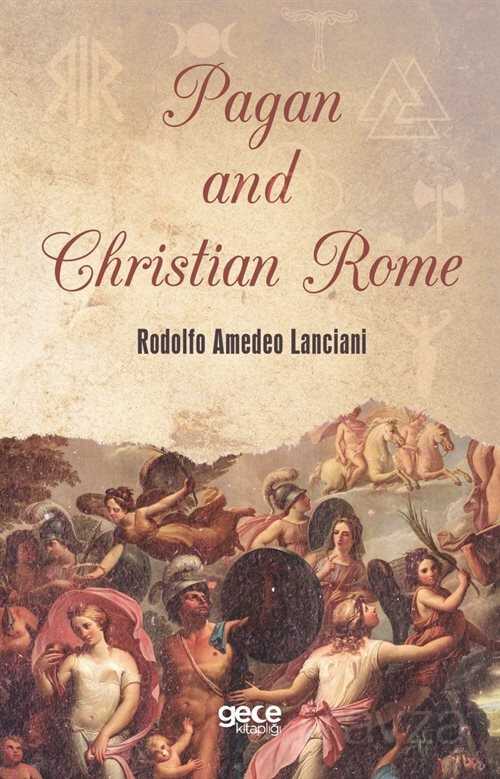
Pagan And Christian Rome
Tükendi
Gelince Haber VerIt has been contended and many still believe that in ancient Rome the doctrines of Christ found no proselytes except among the lower and poorer classes of citizens. That is certainly a noble picture which represents the new faith as searching among the haunts of poverty and slavery seeking to inspire faith hope and charity in their occupants; to transform them from things into human beings; to make them believe in the happiness of a future life; to alleviate their present sufferings; to redeem their children from shame and servitude; to proclaim them equal to their masters. But the gospel found its way also to the mansions of the masters nay even to the palace of the Cæsars. The discoveries lately made on this subject are startling and constitute a new chapter in the history of imperial Rome. We have been used to consider early Christian history and primitive Christian art as matters of secondary importance and hardly worthy the attention of the classical student. Thus none of the four or five hundred volumes on the topography of ancient Rome speaks of the basilicas raised by Constantine; of the church of S. Maria Antiqua built side by side with the Temple of Vesta the two worships dwelling together as it were for nearly a century; of the Christian burial-grounds; of the imperial mausoleum near S. Peter's; of the porticoes several miles in length which led from the centre of the city to the churches of S. Peter S. Paul and S. Lorenzo; of the palace of the Cæsars transformed into the residence of the Popes. Why should these constructions of monumental and historical character be expelled from the list of classical buildings? and why should we overlook the fact that many great names in the annals of the empire are those of members of the Church especially when the knowledge of their conversion enables us to explain events that had been up to the latest discoveries shrouded in mystery?It is a remarkable fact that the record of some of these events should be found not in church annals calendars or itineraries but in passages in the writings of pagan annalists and historians. Thus in ecclesiastical documents no mention is made of the conversion of the two Domitillæ or Flavius Clemens or Petronilla all of whom were relatives of the Flavian emperors; and of the Acilii Glabriones the noblest among the noble as Herodianus calls them (2 3). Their fortunes and death are described only by the Roman historians and biographers of the time of Domitian. It seems that when the official feriale or calendar was resumed after the end of the persecutions preference was given to names of those confessors and martyrs whose deeds were still fresh in the memory of the living and of necessity little attention was paid to those of the first and second centuries whose acts either had not been written down or had been lost during the persecutions.
Kitap Özellikleri| Basım Yılı | 2018 |
| Baskı | 1 |
| Cilt Durumu | Karton Kapak |
| Dil | İngilizce |
| Ebat | 13,5 x 21 |
| ISBN-10 | 6052882733 |
| Kağıt Türü | Kitap Kağıdı |
| Sayfa Sayısı | 357 |
It has been contended and many still believe that in ancient Rome the doctrines of Christ found no proselytes except among the lower and poorer classes of citizens. That is certainly a noble picture which represents the new faith as searching among the haunts of poverty and slavery seeking to inspire faith hope and charity in their occupants; to transform them from things into human beings; to make them believe in the happiness of a future life; to alleviate their present sufferings; to redeem their children from shame and servitude; to proclaim them equal to their masters. But the gospel found its way also to the mansions of the masters nay even to the palace of the Cæsars. The discoveries lately made on this subject are startling and constitute a new chapter in the history of imperial Rome. We have been used to consider early Christian history and primitive Christian art as matters of secondary importance and hardly worthy the attention of the classical student. Thus none of the four or five hundred volumes on the topography of ancient Rome speaks of the basilicas raised by Constantine; of the church of S. Maria Antiqua built side by side with the Temple of Vesta the two worships dwelling together as it were for nearly a century; of the Christian burial-grounds; of the imperial mausoleum near S. Peter's; of the porticoes several miles in length which led from the centre of the city to the churches of S. Peter S. Paul and S. Lorenzo; of the palace of the Cæsars transformed into the residence of the Popes. Why should these constructions of monumental and historical character be expelled from the list of classical buildings? and why should we overlook the fact that many great names in the annals of the empire are those of members of the Church especially when the knowledge of their conversion enables us to explain events that had been up to the latest discoveries shrouded in mystery?It is a remarkable fact that the record of some of these events should be found not in church annals calendars or itineraries but in passages in the writings of pagan annalists and historians. Thus in ecclesiastical documents no mention is made of the conversion of the two Domitillæ or Flavius Clemens or Petronilla all of whom were relatives of the Flavian emperors; and of the Acilii Glabriones the noblest among the noble as Herodianus calls them (2 3). Their fortunes and death are described only by the Roman historians and biographers of the time of Domitian. It seems that when the official feriale or calendar was resumed after the end of the persecutions preference was given to names of those confessors and martyrs whose deeds were still fresh in the memory of the living and of necessity little attention was paid to those of the first and second centuries whose acts either had not been written down or had been lost during the persecutions.
Kitap Özellikleri| Basım Yılı | 2018 |
| Baskı | 1 |
| Cilt Durumu | Karton Kapak |
| Dil | İngilizce |
| Ebat | 13,5 x 21 |
| ISBN-10 | 6052882733 |
| Kağıt Türü | Kitap Kağıdı |
| Sayfa Sayısı | 357 |